Part 107.31 Waivers
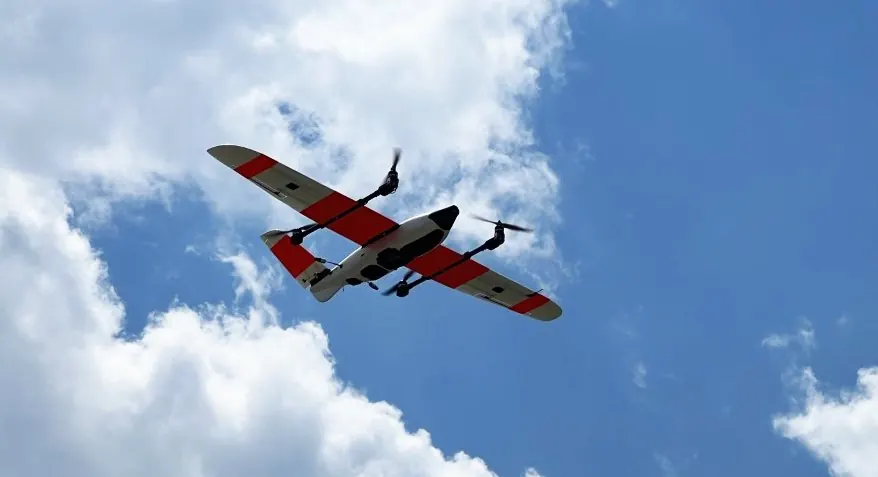
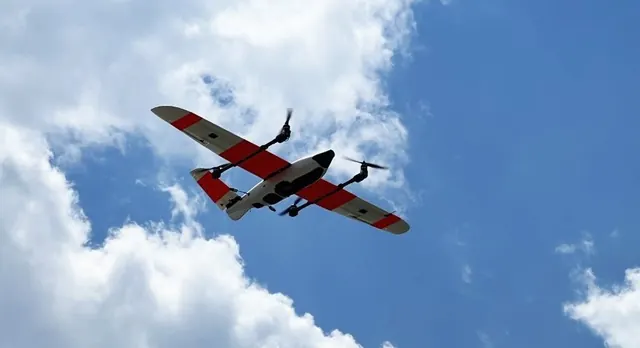
US law requires commercial drones to be flown within visual line of sight (VLOS) of the operator. However, this requirement can be waived if the operator has a sensor that can detect non-cooperative aircraft. KMB software-defined imaging radars are an ideal solution to enable BVLOS operations and allow drone operators to obtain Part 107 / Part 107.31 waivers. KMB radars can be mounted on the ground or in the air for superior situational awareness.
KMB airborne radars can be adapted to the full range of UAS form factors, from tiny battery-powered commercial drones to large Class 4 and 5 UAS. KMB’s “flyweight” radar draws just 1W of power average and can be mounted on small drones with very tight size, weight, power, and cost (SWAP-C) restrictions. For larger drones KMB can offer DO-366A compliant radar that allows flight anywhere in the National Airspace System (NAS).
Ground mounted radars are ideal for dense drone test ranges or urban environments. KMB software-defined imaging radars can see even stationary or hovering targets, making them ideal for drone research or air traffic control (ATC) in and around dense drone landing sites.
In addition, KMB’s patented technology forms radar images with very high dynamic range. This allows the radar to see very faint objects next to very bright objects. This allows radar to be used to detect targets in challenging scenarios that were previously impossible, such as seeing drones near clutter—for example near trees or low to the ground, or seeing drones in urban environments, near very bright radar reflectors like buildings.
Contact Us to learn more about KMB software-defined imaging radar for Part 107.31 Waivers.